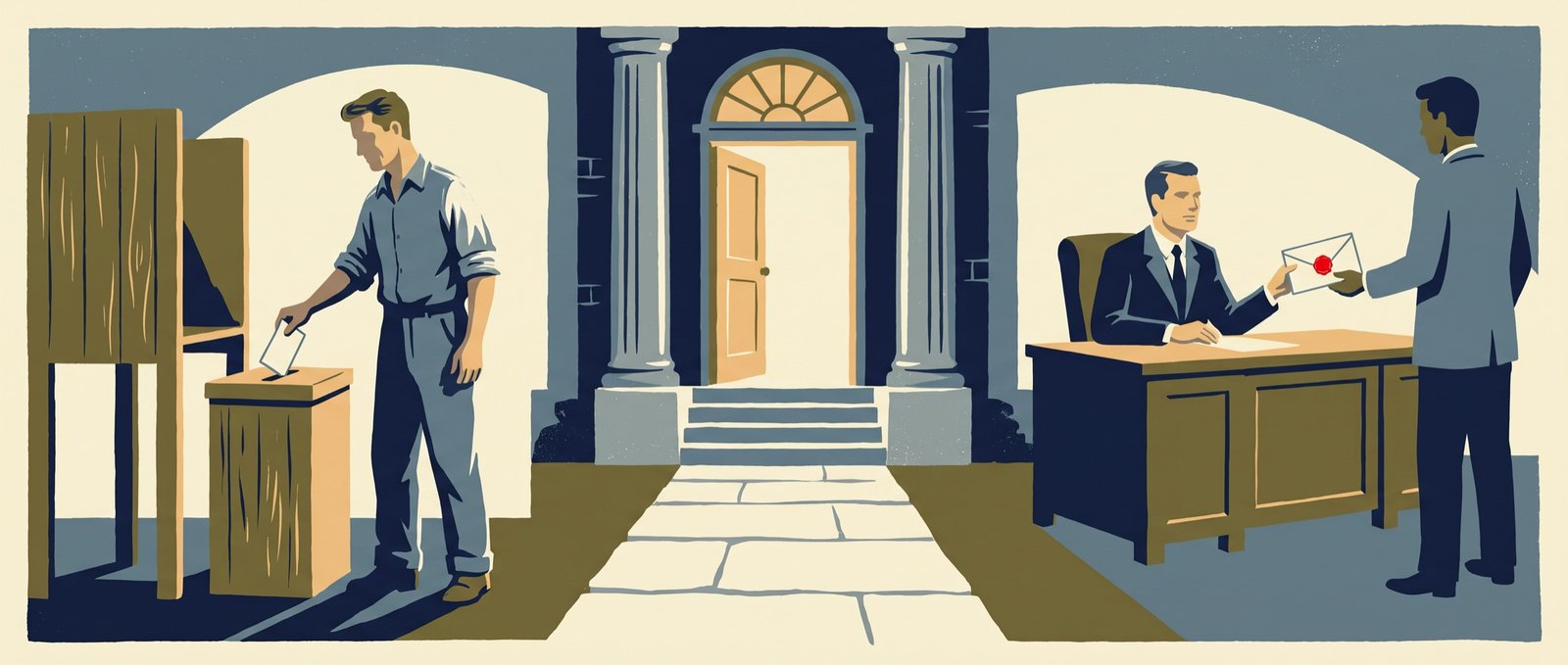
A stretch of road gets narrowed. A permit fee goes up. A school board adopts a curriculum, a state agency writes a rule, a federal office reinterprets a statute that has been on the books for thirty years. Somebody made each of those calls, and in most cases the name is on a document nobody has read.
That is the work here. One civic question at a time, from a neighborhood street up to a federal rule, explained along with the people who decided it and how they got the authority.
Two Parts to Every Brief
The first part is the subject itself. What the policy says, what it costs, what it changed, what the people for it and against it actually argue. Numbers when numbers exist, and a note when they do not.
The second part is the decision chain. Who signed, who recommended, who voted, and how each of them got the job. Sometimes it is an elected official you can vote out at the next election. Often it is a hearing examiner, a department head, a commission, or a board appointed by someone else, working under authority a council or legislature handed over years ago and has not revisited since.
That difference decides what a reader can do next. An elected vote gives you a ballot. An appointed decision gives you a phone number, a meeting calendar, and whoever does the appointing. News coverage tends to report the outcome and skip the chain, though the chain usually sits in public record.
How the Briefs are Put Together
Every claim has a source behind it. Sources are listed at the end with a lean label, from primary and academic through center, left, right, and advocacy, so readers can weigh them instead of guessing from tone.
A brief opens with a short answer and numbered points. Under that: background, where things stand, the case for, the case against, angles that fit neither side, the places sources contradict each other, and what is still unanswered. Acronyms are spelled out at first use and collected in a legend at the bottom.
Where reporting conflicts, both versions get named and quoted and the conflict stays in the text. No endorsements, no scorecards, no advice on how to vote.
What Gets Covered
Land use and street design. Taxes and fees. Public safety law. Schools. Utilities and rates. Health and licensing boards. Elections administration. Anything where the decision affects people who never heard the decision being made.
City and county questions get the same treatment as state and federal ones. Local government makes more decisions per resident and draws a fraction of the attention.
New briefs post as they are finished.